

Are you struggling with your CB antenna’s performance? Maybe your signal isn’t as clear or strong as it should be.
The good news is, you can fix that by learning how to adjust your CB antenna properly. In this guide, you’ll discover simple, step-by-step tips to optimize your antenna for better range and clearer communication. Keep reading, and you’ll be talking like a pro in no time!

Credit: www.walmart.com
Choosing The Right Antenna
Choosing the right CB antenna is key for good radio communication. The antenna affects your signal strength and clarity.
Picking the right antenna depends on your needs and vehicle type. This guide helps you understand the basics.
Types Of Cb Antennas
There are many CB antenna types. Each type suits different uses and setups.
- Whip Antennas: Simple and common, good for general use.
- Magnetic Mount Antennas: Easy to install and remove, ideal for temporary use.
- Base Station Antennas: Larger and fixed, best for home use.
- Fiberglass Antennas: Durable and weather-resistant, often used on trucks.
Antenna Length And Frequency
Antenna length affects how well it picks up signals. It must match the CB radio frequency for best results.
Most CB radios use 27 MHz frequency. The antenna length should be about 9 feet for this frequency.
- Longer antennas can improve range but may be harder to mount.
- Short antennas are easier to install but may reduce signal strength.
- Use a SWR meter to check if your antenna length is correct.
Mounting Options
Where you mount your antenna affects signal quality. Choose a spot with a clear view around the antenna.
Common mounting options include roof, bumper, or mirror mounts. Each has pros and cons.
- Roof Mount: Offers best signal but may need special brackets.
- Bumper Mount: Easy to install but may reduce range.
- Mirror Mount: Good for trucks, keeps antenna visible and safe.
- Mag Mount: Quick on/off but less stable in strong wind.
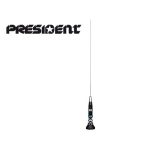
Credit: blog.president-electronics.us
Antenna Installation Tips
Installing a CB antenna correctly improves signal and communication. Small changes can make a big difference in performance.
This guide covers simple tips to adjust and install your CB antenna for the best results.
Optimal Placement
Place the antenna in a clear spot away from metal objects. Metal can block or weaken the signal.
Mount the antenna as high as possible on your vehicle or structure. Height helps the signal travel farther.
- Use the roof or trunk for vehicle antennas
- Avoid placing near other antennas or tall metal parts
- Keep the antenna vertical for best signal
Grounding The Antenna
Good grounding improves antenna performance and reduces noise. Connect the antenna base to a solid ground.
Use a metal surface or grounding wire attached to the vehicle or building frame. This helps the antenna work better.
- Check for tight connections to the ground
- Use a grounding wire if no metal surface is available
- Inspect grounding regularly for rust or loose parts
Securing The Antenna
Secure the antenna firmly to avoid movement. Wind and vibrations can loosen the antenna over time.
Use proper mounts or clamps designed for your antenna type. Check the tightness often to keep it stable.
- Use heavy-duty mounts for vehicles in motion
- Apply thread locker on screws to prevent loosening
- Check mounts after driving or strong winds
Fine-tuning For Best Signal
Adjusting your CB antenna helps you get the best signal. Fine-tuning improves your radio’s performance.
Small changes can make a big difference in signal clarity and range. Use the right tools to adjust correctly.
Using An Swr Meter
An SWR meter measures the standing wave ratio of your antenna. This shows how well your antenna matches your radio.
Connect the SWR meter between your radio and antenna. It helps you find the best antenna length for clear signals.
- Turn on your radio and set to low power
- Transmit a signal and note the SWR reading
- Adjust the antenna and watch for changes in SWR
Adjusting Antenna Height
The height of your antenna affects signal strength. Raising it often improves range and clarity.
Place the antenna as high as possible. Avoid nearby metal objects that can block signals.
- Mount antenna on a roof or tall pole
- Keep it away from large metal surfaces
- Try different heights to find the best signal
Checking And Adjusting Swr
Check the SWR after each antenna adjustment. A low SWR means your antenna matches your radio well.
If SWR is high, shorten or lengthen the antenna. Small changes help reach the ideal SWR below 1.5.
- Start with the antenna fully extended
- Measure SWR and shorten antenna if needed
- Repeat until SWR is at the lowest point

Credit: www.youtube.com
Frequently Asked Questions
How Do I Know If My Cb Antenna Is Properly Tuned?
A properly tuned CB antenna gives a low SWR reading, usually below 1. 5 on your meter.
What Tools Do I Need To Adjust A Cb Antenna?
You mainly need an SWR meter and a screwdriver or wrench to adjust the antenna length.
How Long Should My Cb Antenna Be For Best Signal?
The antenna length depends on your frequency, but about 102 inches is a common size.
Can I Adjust My Cb Antenna Without An Swr Meter?
Adjusting without an SWR meter is hard and less accurate. The meter helps find the best tune.
Why Does My Cb Antenna Need Regular Adjustment?
Temperature, weather, and driving can change antenna length. Regular checks keep your signal clear and strong.
Conclusion
Adjusting your CB antenna improves signal strength and clarity. Start by checking the antenna’s height and angle. Small changes can make a big difference. Use a SWR meter to measure performance during adjustments. Keep the antenna away from metal objects and obstacles.
Proper tuning helps reduce interference and boosts communication range. Regularly inspect your antenna for damage or loose connections. These simple steps keep your CB radio working well. Stay patient and adjust slowly for the best results. Clear signals make your conversations easier and more reliable.