

Are you ready to take your kayak on the road but unsure how to secure it safely to your car? Strapping your kayak to a roof rack might seem tricky at first, but with the right steps, you can make the process quick and hassle-free.
In this guide, you’ll discover simple tips to keep your kayak steady and your drive worry-free. Keep reading to learn how to protect your gear and enjoy every adventure without the stress of a shaky load.
Choosing The Right Roof Rack
Strapping your kayak to the roof rack starts with choosing the correct rack. The right rack keeps your kayak safe and secure during travel.
Not all racks fit all kayaks. You must know the types of roof racks and their features before buying.
Types Of Roof Racks
There are several roof rack types. Each has unique benefits for carrying kayaks.
- Factory racks: These come with your car and fit basic needs.
- Crossbars: Bars that attach across your car roof for secure mounting.
- Load bars: Stronger bars designed to hold heavier loads.
- J-cradles: Hold kayaks on their side for stable transport.
- Stackers: Carry kayaks flat and stacked on top of each other.
Rack Compatibility With Kayaks
Check if the roof rack matches your kayak’s shape and size. Some racks work better with specific kayak types.
| Kayak Type | Recommended Rack |
| Recreational | J-cradles or padded crossbars |
| Touring | Load bars with foam blocks |
| Inflatable | Soft racks or roof pads |
| Fishing | Stackers or J-cradles |
Weight Limits And Safety
Every roof rack has a weight limit. Follow these limits to avoid damage or accidents.
- Check the maximum load rating on the rack and your car roof.
- Include the kayak weight and all gear when calculating total load.
- Use strong straps or tie-downs rated for your kayak’s weight.
- Secure the kayak tightly to prevent movement during travel.
- Inspect straps and rack for wear before each trip.
Credit: www.vevor.com
Preparing Your Kayak For Transport
Strapping your kayak to a roof rack needs careful preparation. This keeps your kayak safe during travel.
Follow these steps to prepare your kayak well before you start driving.
Cleaning And Inspecting The Kayak
Clean the kayak to remove dirt and debris. Check for cracks or damage. Fix any small issues before transport.
- Rinse off mud and sand with water
- Use mild soap for tough spots
- Dry the kayak completely to avoid mold
- Look for cracks, holes, or loose parts
- Tighten or replace any loose fittings
Positioning The Kayak On The Rack
Place the kayak so it balances well on the roof rack. Center it to keep it steady on the road.
| Kayak Type | Best Position |
| Sit-on-top | Bottom down, centered |
| Sit-in | Hull down, centered |
| Inflatable | Deflated and secured in bag |
Protective Padding And Accessories
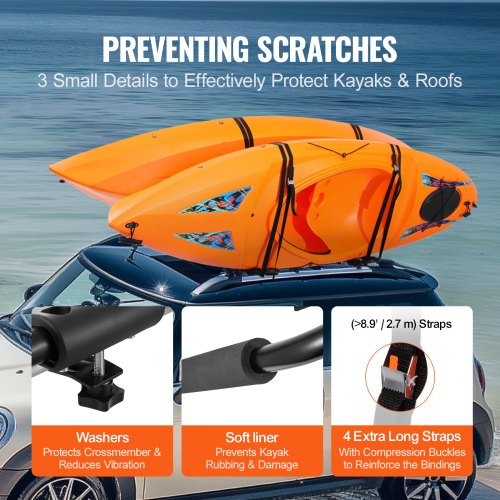
Add padding between the kayak and the rack. This protects both surfaces from scratches and dents.
Use these padding options:
- Foam blocks or pads on rack bars
- Soft blankets or towels
- Special kayak roof rack cushions
Tie down straps with ratchets or cam locks keep the kayak secure.
Strapping Techniques For Secure Transport
Strapping your kayak to a roof rack keeps it safe during travel. Using the right methods helps avoid damage to your kayak and vehicle.
This guide covers how to choose straps, secure your kayak, and check for safety before you drive.
Selecting Suitable Straps
Choose straps that hold your kayak firmly without slipping. Look for strong materials like nylon or polyester webbing.
- Use cam buckle straps for easy tightening and release.
- Avoid ratchet straps as they can overtighten and damage the kayak.
- Look for straps at least 1 inch wide to spread pressure evenly.
- Make sure the straps are long enough to wrap around the kayak and roof rack.
Step-by-step Strapping Process
Follow these steps to secure your kayak safely on the roof rack.
- Place your kayak upside down on the roof rack.
- Position the straps over the kayak, near the ends.
- Thread the strap ends through the cam buckles.
- Tighten the straps until the kayak feels secure but not crushed.
- Attach bow and stern lines to the front and back of your vehicle for extra hold.
Double-checking And Safety Tips
Check all straps and knots before you start driving to ensure safety.
| Check | What to Look For |
| Strap Tightness | Straps should be snug without damaging the kayak |
| Cam Buckles | Secure and locked in place |
| Bow and Stern Lines | Tied tightly to vehicle anchor points |
| Strap Condition | No frays or damage on the straps |
| Kayak Position | Centered and balanced on the roof rack |

Credit: www.reddit.com

Credit: www.reddit.com
Frequently Asked Questions
How Do I Secure A Kayak To A Roof Rack Safely?
Use strong straps to tie the kayak tightly to the rack. Check for no movement.
What Type Of Straps Work Best For Kayak Roof Racks?
Use wide, non-stretchy straps like cam buckle or ratchet straps for strong hold.
Should I Use Foam Blocks When Strapping My Kayak?
Yes, foam blocks protect your kayak and roof from scratches and improve stability.
How Tight Should Kayak Straps Be On A Roof Rack?
Straps should be tight enough to stop kayak from shifting but not so tight they damage it.
Can I Tie A Kayak Upside Down On The Roof Rack?
Yes, upside down helps balance and protect the kayak’s hull during transport.
Conclusion
Strapping a kayak to your roof rack is simple with the right steps. Secure the kayak tightly to avoid movement during travel. Use good straps and check them often for safety. Place the kayak facing the right direction to reduce wind resistance.
Take your time and double-check every strap before you drive. This helps protect your kayak and your car. Safe travel means a fun trip on the water. Keep practicing these tips, and loading your kayak will feel easy every time.