

Last Updated on June 17, 2026
Have you ever faced the challenge of removing a stuck bearing without damaging your equipment? If so, you know how tricky and frustrating it can be.
That’s where a bearing puller comes in—a simple tool that makes this tough job easier and safer. You’ll discover exactly what a bearing puller is, how it works, and why it might be the tool you didn’t know you needed.
Keep reading, and you’ll be ready to handle bearings like a pro.

Credit: www.amazon.com
Purpose Of A Bearing Puller
A bearing puller is a tool used to remove bearings from machines and vehicles. Bearings fit tightly on shafts and inside housings. Removing them without damage needs the right tool.
Using a bearing puller makes the removal process safer and faster. It helps avoid damage to the bearing, shaft, or housing during removal.
Removing Bearings Safely
The main purpose of a bearing puller is to remove bearings without harming them or the parts around them. Bearings are pressed tightly and can be hard to take off by hand.
Preventing Damage To Machine Parts
Using a bearing puller prevents damage to the shaft and housing. It applies even pressure to pull the bearing off. This stops scratches and bending that can happen with improper tools.
Types Of Bearing Pullers And Uses
- Two-jaw pullers for small and medium bearings
- Three-jaw pullers for larger bearings needing more grip
- Hydraulic pullers for very tight or large bearings
- Internal pullers for bearings inside housings
Benefits Of Using A Bearing Puller
| Benefit | Description |
| Safety | Reduces risk of injury by using the correct tool |
| Efficiency | Makes bearing removal faster and easier |
| Precision | Applies force evenly to avoid damage |
| Cost Saving | Prevents costly repairs from damaged parts |
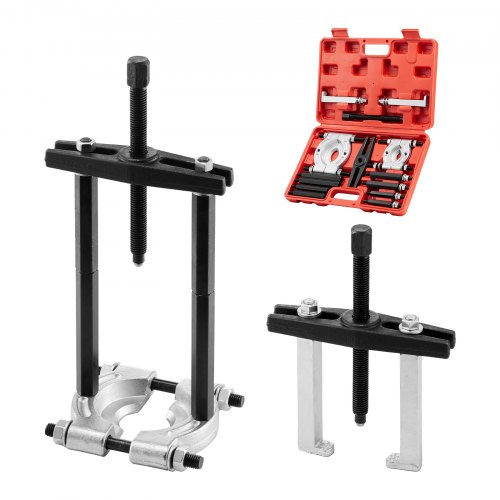
Credit: www.vevor.com
Types Of Bearing Pullers
Bearing pullers are tools designed to remove bearings safely from shafts or housings. They come in different types to suit various sizes and applications.
This guide explains three common types of bearing pullers and their main features.
Two-jaw Pullers
Two-jaw pullers have two arms that grip the bearing. They are good for smaller bearings and tight spaces. These pullers apply even force to avoid damage.
Three-jaw Pullers
Three-jaw pullers use three arms to hold the bearing firmly. They offer better balance and grip on round objects. This makes them ideal for larger bearings.
- Provide equal pressure around the bearing
- Reduce risk of slipping
- Work well on circular parts
Hydraulic Pullers
Hydraulic pullers use fluid pressure to pull bearings. They are powerful and require less effort. These pullers are best for heavy or stuck bearings.
| Feature | Advantage |
| Hydraulic Power | Strong force with low manual effort |
| Adjustable Arms | Fits various bearing sizes |
| Safe Operation | Reduces damage risk |
How Bearing Pullers Work
Bearing pullers help remove bearings from machines safely. They use force to pull bearings off shafts or housings.
These tools prevent damage to the bearing and the machine parts. They work by applying even pressure to pull the bearing out.
Gripping The Bearing
Bearing pullers have arms or jaws that grip the bearing tightly. The grip must be strong to avoid slipping during removal.
The arms fit around or behind the bearing. This holds the bearing steady as the puller pulls it off the shaft.
Applying Pulling Force
A central screw or hydraulic mechanism applies force to the bearing. Turning the screw pushes against the shaft or housing.
This force pulls the bearing away from its position. The pressure is steady and controlled to avoid damage.
Different bearing pullers work in various ways. Some use mechanical screws, others use hydraulics for more power.
- Mechanical pullers use a screw to create pulling force.
- Hydraulic pullers use fluid pressure for strong force.
- Two-jaw and three-jaw pullers grip bearings in different ways.
Safety Features In Bearing Pullers
Many bearing pullers have safety features to protect users. These include guards and pressure release valves.
These features stop sudden movements and reduce the risk of injury during use.

Credit: www.amazon.com
Tips For Safe And Effective Use
A bearing puller helps remove bearings from machines without damage. Using it safely protects you and your tools.
Follow simple tips to make sure you use the bearing puller correctly and avoid injuries or broken parts.
Check The Puller Condition
Before use, inspect the bearing puller for cracks, rust, or worn parts. A damaged puller may break during use.
Secure The Workpiece Firmly
Make sure the part holding the bearing is stable. Use clamps or a vise to stop movement. This prevents slipping and accidents.
Use The Correct Puller Size
Choose a bearing puller that fits the bearing size. Using the wrong size can cause damage or make the job harder.
Apply Force Evenly And Slowly
Turn the puller’s screw slowly and evenly. Fast or uneven force can bend or break the bearing or puller arms.
Wear Safety Gear
Protect your eyes with safety goggles. Wear gloves to avoid cuts. Always stand clear in case parts fly off.
Lubricate If Needed
Use lubricant on the bearing and puller threads. This reduces friction and helps the bearing come off smoothly.
Store The Puller Properly
- Clean the puller after use
- Keep it in a dry place
- Check for damage before storing
- Oil moving parts to prevent rust
Frequently Asked Questions
What Is A Bearing Puller Used For?
A bearing puller removes bearings from machines safely and without damage.
How Does A Bearing Puller Work?
It grips the bearing and pulls it off the shaft evenly.
What Types Of Bearing Pullers Exist?
Common types include two-jaw, three-jaw, and hydraulic pullers.
Can I Use A Bearing Puller At Home?
Yes, it is simple to use for basic bearing removal tasks.
Why Choose A Bearing Puller Over Other Tools?
It prevents damage to bearings and machine parts during removal.
Conclusion
A bearing puller helps remove bearings safely and quickly. It fits around the bearing and pulls it out without damage. Using the right tool saves time and effort. This tool is useful in many mechanical repairs and machines. Understanding how a bearing puller works makes repairs easier.
Keep this tool in your toolbox for smooth maintenance. Simple, effective, and reliable—bearing pullers serve an important role.