

Last Updated on April 15, 2026
Have you ever wondered why your engine isn’t running as smoothly as it used to? The answer might lie in its compression.
Understanding what a compression tester for engines is can save you time, money, and frustration. This simple tool gives you a clear picture of your engine’s health, helping you spot problems before they become costly repairs. Keep reading to discover how a compression tester works and why it’s a must-have for anyone serious about maintaining their vehicle.
Your engine’s performance depends on it.

Credit: www.amazon.com
Purpose Of A Compression Tester
A compression tester measures the pressure inside an engine’s cylinder. It helps check the engine’s health and performance.
This tool shows if the engine seals, valves, and piston rings work correctly. It can find problems early before they get worse.
Checking Engine Cylinder Pressure
A compression tester measures how much pressure builds up in each cylinder. This pressure is needed for the engine to run well.
Low pressure in a cylinder means there might be leaks or worn parts. High pressure shows the cylinder seals are tight and working.
Diagnosing Engine Problems
Using a compression tester helps find engine problems like worn piston rings or bad valves. These parts cause low compression.
By finding the problem early, you can fix the engine faster and avoid big repairs later.
Improving Engine Performance
A compression tester helps keep the engine running at its best. Good compression means better fuel use and power.
Regular testing can keep your engine strong and efficient for a long time.
Verifying Repairs
After fixing engine parts, a compression tester checks if the repair worked well. It confirms the engine has good pressure again.
This step ensures the engine is ready for use and prevents future problems.

Credit: www.amazon.com
Types Of Compression Testers
A compression tester checks the pressure inside engine cylinders. It helps find engine problems like worn rings or valves.
There are several types of compression testers. Each type works differently and suits different engines.
Mechanical Compression Testers
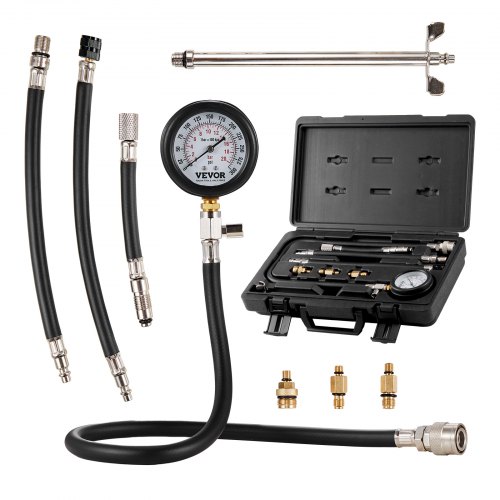
Mechanical testers use a gauge with a needle to show pressure. The gauge connects to the spark plug hole.
When the engine turns, pressure pushes the needle. You read the pressure directly on the dial.
- Simple to use and read
- No batteries needed
- Usually less expensive
Digital Compression Testers
Digital testers show pressure on a screen. They use sensors to measure the pressure inside cylinders.
These testers give precise readings and often save data for later review.
- Easy to read digital display
- Can store and compare results
- Requires batteries to work
Wet Compression Testers
Wet testers add a small amount of oil to the cylinder before testing. The oil helps seal worn rings.
This test shows if low compression is caused by ring wear or other problems.
- Add oil to cylinder before testing
- Higher pressure means worn rings
- Helps diagnose engine wear
Leak-down Testers
Leak-down testers send air into the cylinder at a set pressure. They measure how much air leaks out.
This test shows where the engine leaks air, such as valves or head gaskets.
- Tests air leakage in cylinders
- Finds specific leak locations
- More detailed than simple compression tests
How To Use A Compression Tester
A compression tester helps check the engine’s health. It measures the pressure inside the engine cylinders.
Using this tool shows if the engine parts work well or need repair.
Prepare The Engine
First, warm up the engine to normal running temperature. Then turn it off before testing.
Remove all spark plugs to allow the engine to turn freely during the test.
Attach The Compression Tester
Screw the compression tester’s hose into the spark plug hole. Make sure it fits tight to avoid air leaks.
Check the tester gauge is set to zero before starting the engine.
Crank The Engine
Hold the throttle wide open to let more air into the engine. This gives a better pressure reading.
Crank the engine using the starter for about five seconds. Watch the gauge for the highest reading.
Record And Compare Readings
Write down the pressure reading for each cylinder. Test all cylinders one by one.
Compare the numbers to the engine manufacturer’s specifications. Low or uneven readings show engine problems.
Release The Pressure
Press the release valve on the tester to let out the pressure safely. This resets the gauge for the next test.
Remove the tester and reinstall the spark plugs. Tighten them to the correct torque.
Credit: www.vevor.com
Interpreting Compression Test Results
A compression tester measures the pressure inside an engine’s cylinders. This test helps find engine problems early. Understanding the results is key to knowing your engine’s health.
Each cylinder should have similar pressure readings. Differences can show issues like worn piston rings or valve leaks. Let’s look at how to read and understand these numbers.
Normal Compression Range
Most gasoline engines have a compression reading between 120 and 160 psi. Diesel engines usually show higher pressure. If your numbers fall in this range, the engine is likely fine.
Low Compression In One Cylinder
If one cylinder reads much lower than the others, it may have a problem. Common causes include worn piston rings, leaking valves, or a blown head gasket. This can cause rough running or loss of power.
Consistent Low Compression
All cylinders showing low pressure usually point to engine wear. This can be due to old age or poor maintenance. It often means the engine needs a rebuild or replacement.
Compression Test Comparison Table
| Compression Result | Possible Cause | Action Needed |
|---|---|---|
| 120-160 psi (Gasoline Engines) | Normal | No action needed |
| Low in One Cylinder | Worn rings, valve leak, head gasket | Further diagnosis and repair |
| Low in All Cylinders | Engine wear or damage | Engine overhaul or replacement |
| Very High or Uneven | Carbon buildup or tester error | Clean engine or retest |
Frequently Asked Questions
What Is A Compression Tester For Engines?
A compression tester measures the pressure inside an engine’s cylinders to check engine health.
Why Is Engine Compression Testing Important?
It helps find problems like worn rings or leaks that reduce engine power and efficiency.
How Does A Compression Tester Work?
It screws into the spark plug hole and shows cylinder pressure during engine cranking.
When Should You Use A Compression Tester?
Use it when the engine runs rough, lacks power, or after repairs to check condition.
Can A Compression Tester Save Engine Repair Costs?
Yes, it helps detect issues early, avoiding expensive repairs by diagnosing problems quickly.
Conclusion
A compression tester helps check engine health quickly. It shows how well the engine holds pressure. Low readings can mean worn parts or leaks. Regular testing can save costly repairs later. Everyone who cares for engines should know this tool.
Simple to use and gives clear results fast. Keep your engine running strong with this basic check. Easy to learn, useful for any vehicle owner. Understanding compression helps spot problems early. A small tool with big benefits for your engine.