

Last Updated on April 15, 2026
When you reach for a wrench or socket, do you ever wonder why some tools are marked in numbers like 10mm, while others say 3/8 inch? Understanding the difference between metric and SAE tools can save you time, frustration, and even money.
If you’ve ever struggled with a stubborn bolt or ended up with the wrong size tool, this guide is for you. By the end, you’ll know exactly which tools to use for your projects and why it matters. Keep reading, and you’ll never mix up your tools again.
Credit: www.osk-tools.com
Metric Tools Basics
Metric tools are designed to work with metric fasteners and measurements. These tools use the metric system, which is based on meters, liters, and grams.
They are common worldwide and are made to fit parts measured in millimeters or centimeters. Using metric tools ensures better fit and accuracy for metric hardware.
Common Sizes And Standards
Metric tools come in sizes that match metric fasteners. These sizes are usually in millimeters and follow international standards.
- Wrench sizes: 6mm to 32mm are common
- Socket sizes: match bolt head sizes in millimeters
- Standard metric threads: M6, M8, M10, M12, etc.
Metric standards are set by the International Organization for Standardization (ISO). This keeps metric tools compatible worldwide.
Measurement Units
Metric tools use millimeters (mm) as the main unit. This unit measures the width or diameter of bolts and nuts.
Other units in the metric system include centimeters (cm) and meters (m), but tools mostly use millimeters for precision.
- Millimeter (mm): 1/1000 of a meter
- Centimeter (cm): 10 millimeters
- Meter (m): 1000 millimeters
Credit: www.youtube.com
Sae Tools Basics
SAE tools refer to tools made to fit fasteners measured in inches. They are common in the United States and countries using the imperial system. SAE stands for Society of Automotive Engineers, which set these standards.
These tools are often used in automotive, machinery, and home repair. Understanding their sizes and measurement units helps you pick the right tool for the job.
Standard Sizes And Usage
SAE tools come in set sizes based on fractions of an inch. They fit bolts and nuts made with those sizes. Here are common SAE wrench and socket sizes:
- 1/4 inch
- 5/16 inch
- 3/8 inch
- 7/16 inch
- 1/2 inch
- 9/16 inch
- 5/8 inch
- 3/4 inch
- 7/8 inch
- 1 inch
These sizes are used for tightening or loosening nuts and bolts. Each tool is made to fit its exact size to avoid damage.
Measurement Units
| Unit | Used For | Example |
| Inches | SAE tool sizes | 1/2 inch wrench |
| Fractions | Exact fit sizes | 3/8 inch socket |
| Decimal Inches | Precision measurements | 0.375 inch bolt |
SAE tools measure in inches and fractions. This differs from metric tools that use millimeters. Knowing these units helps you choose the correct tool and avoid stripping bolts.
Comparing Metric And Sae Tools
Tools come in two main size standards: Metric and SAE. These standards help measure nuts, bolts, and fittings.
Knowing the difference helps you pick the right tool for your work. It also saves time and prevents damage.
Key Differences
Metric tools use millimeters to measure size. SAE tools use inches or fractions of an inch. Metric sizes are often round numbers like 10mm or 15mm.
SAE sizes can be more complex, such as 1/4 inch or 3/8 inch. Because of this, SAE tools have more size variations.
| Aspect | Metric Tools | SAE Tools |
| Measurement Unit | Millimeters (mm) | Inches (in) |
| Common Sizes | 6mm, 8mm, 10mm, 12mm | 1/4″, 3/8″, 1/2″, 3/4″ |
| Used In | Worldwide, especially outside US | United States and some other countries |
| Tool Markings | Numbers only | Fractions or decimal inches |
Interchangeability Issues
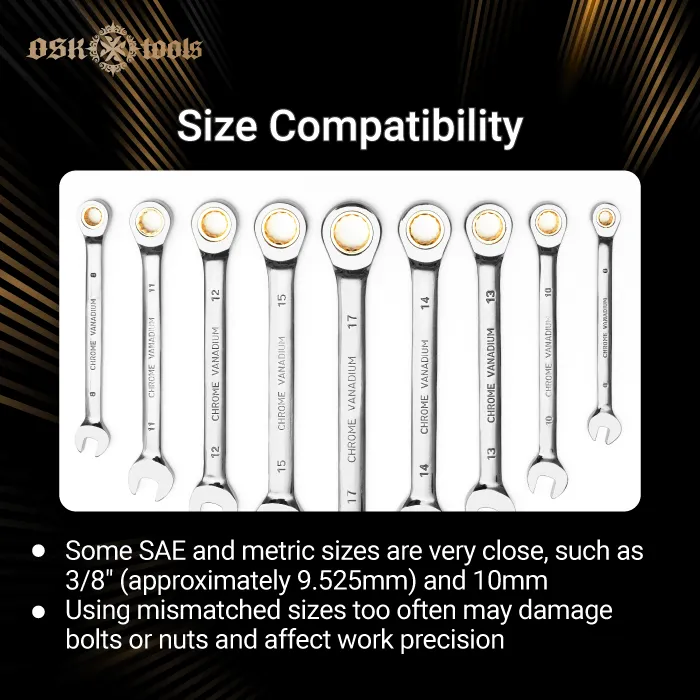
Metric and SAE tools look similar but are not always interchangeable. Using the wrong size can cause damage.
- Metric sockets fit metric bolts better.
- SAE wrenches fit inch-sized nuts more accurately.
- Mixing sizes can round off bolt heads.
- Some tools are marked to avoid confusion.
Credit: www.osk-tools.com
Choosing The Right Tools
Metric and SAE tools measure different units. Metric tools use millimeters, SAE tools use inches.
Picking the right tools saves time and prevents damage to parts. Knowing which to use is important.
Application Considerations
Check the part you work on to decide tool type. Metric tools fit bolts sized in millimeters.
Use SAE tools for bolts measured in inches. Mixing tool types can cause slipping and damage.
- Look at the bolt or nut size before choosing
- Use metric tools for metric fasteners
- Use SAE tools for imperial fasteners
- Never force the wrong tool size
Tips For Experts
Keep both metric and SAE tools in your kit. This helps you work on any project without delay.
Clean tools after use to keep them accurate. Store them properly to avoid damage and loss.
- Label your tool sets for quick identification
- Check tools for wear before use
- Use the correct size to avoid stripping bolts
- Practice with both types to improve skill
Frequently Asked Questions
What Are Metric Tools And Sae Tools?
Metric tools use millimeters for size, while SAE tools use inches or fractions.
Why Do Sae And Metric Tools Differ In Size?
They follow different measurement systems: Metric is metric units, SAE is imperial units.
Can Metric And Sae Tools Be Used Interchangeably?
Not usually. Sizes often don’t match, which can damage bolts or tools.
Which Tools Are Common In The Us, Metric Or Sae?
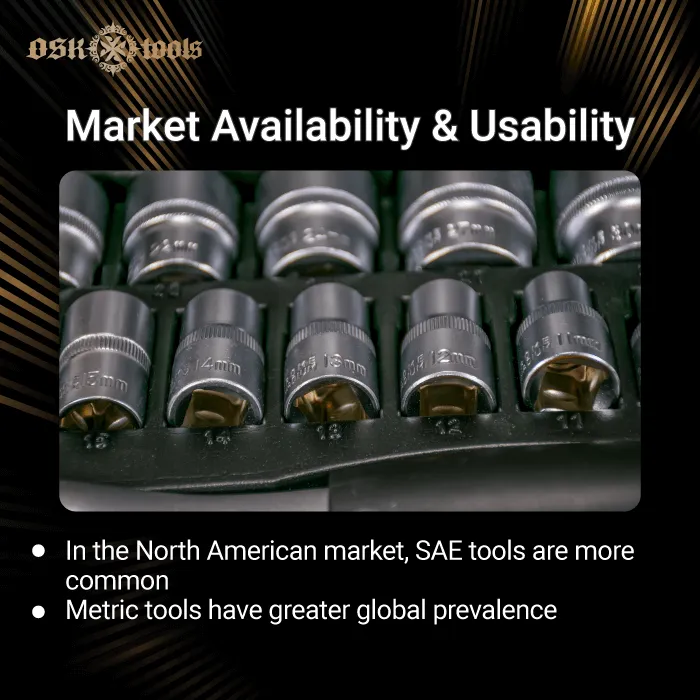
SAE tools are more common in the US; Metric is more global.
How To Identify Metric Vs Sae Tools Quickly?
Metric tools have sizes in mm, SAE tools show fractions or decimals in inches.
Conclusion
Metric and SAE tools serve different purposes. Metric tools use millimeters, while SAE tools use inches. Choosing the right set helps you work faster and avoid mistakes. Keep both types if you work on various projects. Understanding their differences saves time and effort.
Always check the measurement before starting any task. This small step ensures tools fit perfectly. Use the right tool for the job. It makes your work easier and safer. Simple knowledge goes a long way in tool use.