

Last Updated on April 15, 2026
When it comes to keeping your vehicle’s brakes working smoothly, the type of brake fluid you use matters more than you might think. You’ve probably seen labels like DOT 3, DOT 4, and DOT 5 on brake fluid containers—but what do these differences actually mean for your car’s safety and performance?
Choosing the right brake fluid can protect your braking system, prevent costly repairs, and keep you safe on the road. You’ll discover the key differences between DOT brake fluids and learn how to pick the best one for your vehicle.
Keep reading to make sure your brakes stay reliable when you need them most.

Credit: www.youtube.com
Types Of Dot Brake Fluids
DOT brake fluids are essential for vehicle braking systems. They help transfer force from the brake pedal to the brakes.
There are different types of DOT brake fluids. Each type has unique properties and uses.
Dot 3
DOT 3 brake fluid is glycol-based and commonly used in many cars. It has a boiling point suitable for everyday driving conditions.
This fluid absorbs moisture over time, which can lower its boiling point. Regular changes help keep brakes working well.
Dot 4
DOT 4 brake fluid is also glycol-based but has a higher boiling point than DOT 3. It works better in high-performance vehicles.
- Better heat resistance
- Common in modern vehicles
- Absorbs moisture like DOT 3
- Needs regular replacement
Dot 5
DOT 5 brake fluid is silicone-based and does not absorb water. It is used in vehicles stored for long periods.
DOT 5 is not compatible with DOT 3 or DOT 4 fluids. It should not be mixed with glycol-based fluids.
Dot 5.1
DOT 5.1 is glycol-based like DOT 3 and DOT 4 but has a higher boiling point. It suits vehicles that need strong braking power.
| Type | Base | Water Absorption | Boiling Point (°C) | Use |
| DOT 3 | Glycol | Yes | 205 (dry) | Everyday vehicles |
| DOT 4 | Glycol | Yes | 230 (dry) | Modern and performance cars |
| DOT 5 | Silicone | No | 260 (dry) | Stored or classic cars |
| DOT 5.1 | Glycol | Yes | 260 (dry) | High-performance vehicles |
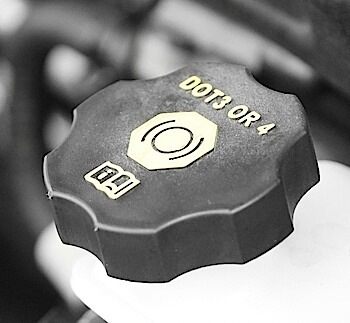
Credit: www.brakeandfrontend.com
Chemical Properties And Composition
Brake fluids have different chemical makeups. These affect how they work in vehicles. Understanding their composition helps in choosing the right fluid.
Two main types of brake fluids are glycol-based and silicone-based. Each type has unique chemicals and properties.
Glycol-based Fluids
Glycol-based fluids mainly contain polyalkylene glycol ethers. They absorb water from the air, which can lower performance over time.
These fluids are compatible with most brake system materials. They are also clear or light amber in color.
Silicone-based Fluids
Silicone-based fluids use polydimethylsiloxane as their main chemical. They do not absorb water, so they stay stable longer.
- Resist moisture absorption
- Have longer service life
- Are often used in classic cars
- Are usually more expensive than glycol fluids
Boiling Points
| Type | Dry Boiling Point (°C) | Wet Boiling Point (°C) |
| Glycol-based | 260 – 270 | 140 – 160 |
| Silicone-based | 270 – 280 | 220 – 230 |
Performance Impacts On Safety
Brake fluid is critical for safe vehicle operation. Different DOT brake fluids perform differently under stress.
Understanding key properties helps drivers choose the right fluid for safety and performance.
Heat Resistance
Brake fluids must resist high temperatures during braking. Higher heat resistance means better safety.
DOT 4 and DOT 5.1 fluids have higher boiling points than DOT 3. This reduces vapor lock and brake fade.
Moisture Absorption
Brake fluids absorb moisture over time, lowering boiling points and risking brake failure.
- DOT 3 absorbs moisture quickly, needing frequent changes.
- DOT 4 absorbs moisture slower, lasting longer.
- DOT 5.1 resists moisture well but is still glycol-based.
- DOT 5 is silicone-based and does not absorb moisture.
Corrosion Prevention
Brake fluid must protect metal parts from rust and corrosion. This keeps brake components working well.
| DOT Fluid Type | Corrosion Protection |
| DOT 3 | Moderate protection |
| DOT 4 | Improved additives reduce corrosion |
| DOT 5.1 | High corrosion resistance |
| DOT 5 | Excellent protection, but not compatible with others |
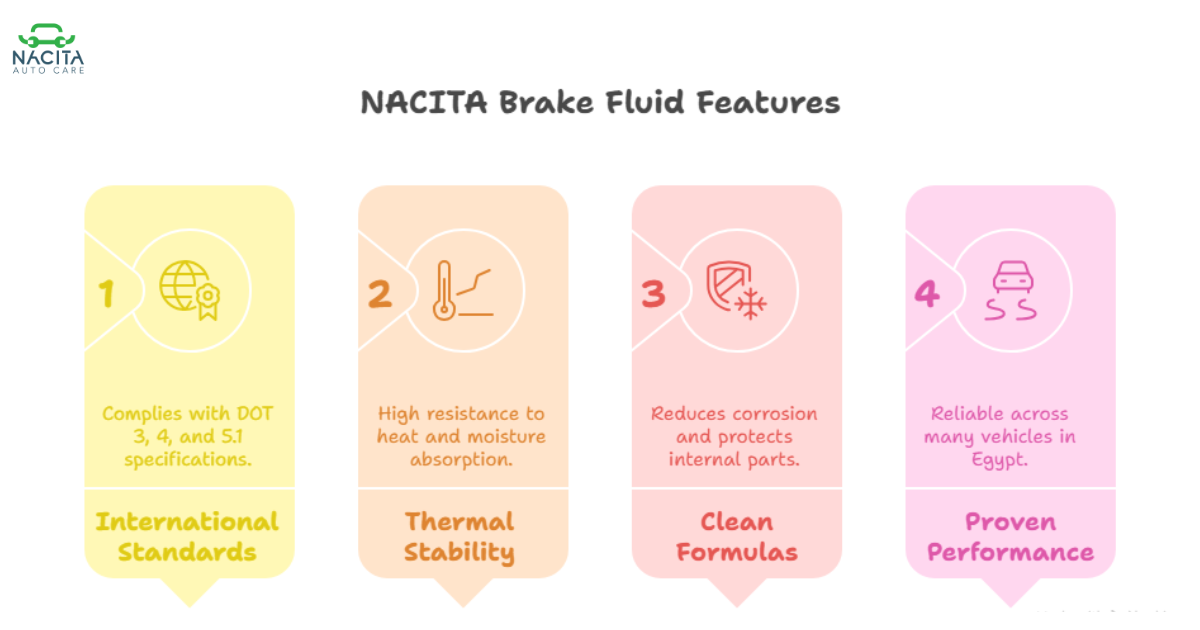
Credit: nacitaautocare.com
Choosing The Right Brake Fluid
Brake fluid is a key part of your vehicle’s braking system. It helps transfer force from the pedal to the brakes. Using the right type keeps your brakes working well and safe.
There are different types of brake fluid called DOT 3, DOT 4, DOT 5, and DOT 5.1. Each has different features. Knowing the difference helps you pick the best one for your car.
Vehicle Requirements
Your car’s manual tells you which brake fluid to use. This depends on the system design and temperature needs. Using the wrong fluid can harm parts or reduce brake power.
DOT 3 and DOT 4 fluids are common in many cars. DOT 5 is silicone-based and not for all vehicles. DOT 5.1 has a higher boiling point and works in heavy-duty cars.
- Check your owner’s manual for the correct DOT type.
- Use DOT 3 or DOT 4 for most regular cars.
- Use DOT 5 only if your car manual allows it.
- Choose DOT 5.1 for trucks or vehicles that need high heat resistance.
Maintenance Tips
Brake fluid absorbs moisture over time, which lowers its boiling point. This can cause brake failure in hot conditions. Regularly checking and changing brake fluid keeps brakes safe.
Always use fresh brake fluid. Store it in a sealed container to avoid moisture. Flush the old fluid at the intervals recommended by your car maker.
- Check brake fluid level monthly.
- Change brake fluid every 1-2 years or as advised.
- Keep brake fluid containers tightly closed.
- Use only the type recommended by your vehicle.
Common Mistakes
Using the wrong brake fluid can cause damage or brake failure. Mixing DOT 5 with other fluids can harm the system. Also, ignoring fluid changes makes brakes less effective.
Some people add brake fluid without checking the type or condition. This can lead to brake problems or leaks. Always be careful and follow the manual instructions.
- Do not mix DOT 5 with DOT 3, 4, or 5.1 fluids.
- Never use old or contaminated brake fluid.
- Do not ignore brake fluid level or condition.
- Avoid overfilling the brake fluid reservoir.
Frequently Asked Questions
What Are Dot Brake Fluids And Their Types?
DOT brake fluids are hydraulic fluids for brakes. Types include DOT 3, DOT 4, DOT 5, and DOT 5. 1.
How Do Dot 3 And Dot 4 Brake Fluids Differ?
DOT 4 has a higher boiling point than DOT 3, making it better for high temperatures.
Can I Mix Different Dot Brake Fluids Safely?
Mixing DOT 3, DOT 4, and DOT 5. 1 is usually safe, but avoid mixing DOT 5.
Why Is Boiling Point Important For Brake Fluids?
Higher boiling points prevent vapor formation, ensuring safe braking under hot conditions.
Which Dot Brake Fluid Is Best For Everyday Driving?
DOT 3 is common for regular use; DOT 4 suits heavier braking and newer cars.
Conclusion
Choosing the right DOT brake fluid keeps your vehicle safe and working well. Different types have unique boiling points and uses. Mixing fluids can harm your brake system. Always check your car’s manual before buying brake fluid. Regular fluid changes help avoid brake failure.
Understanding these differences saves money and prevents accidents. Stay careful and keep your brakes in top shape. Safety on the road starts with the right brake fluid choice.