

Last Updated on February 18, 2026
Have you ever wondered what really makes your car move when you turn the key? It’s all about how the engine generates power.
Understanding this can give you a new appreciation for your vehicle and even help you take better care of it. You’ll discover the simple yet fascinating process behind your car’s engine power. By the end, you’ll see your car in a whole new light—and who knows, you might impress your friends with what you learn! Keep reading to unlock the secrets under your hood.
Engine Basics
Car engines turn fuel into power that moves the vehicle. Understanding how this happens helps you learn about engine function.
Engines use air and fuel to create controlled explosions. These explosions push parts that make the car go.
Key Components
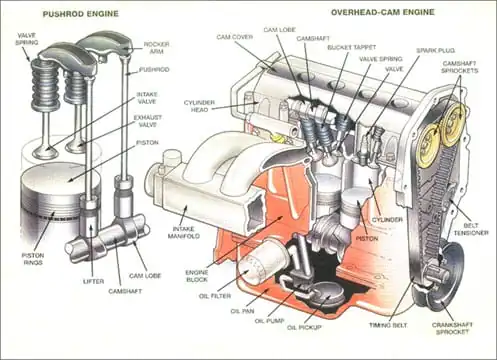
Several parts work together inside an engine. Each part has a role in making power and keeping the engine running smoothly.
- Pistons:Move up and down inside cylinders to create pressure.
- Cylinders:Chambers where fuel burns and power is made.
- Crankshaft:Turns piston movement into rotational power.
- Valves:Open and close to let air in and exhaust out.
- Spark Plugs:Create sparks that ignite the fuel-air mix.
Four-stroke Cycle
The engine uses four strokes to complete one power cycle. Each stroke plays a key part in creating engine power.
| Stroke | Description |
| Intake | Valve opens; piston moves down; air-fuel mix enters cylinder. |
| Compression | Valve closes; piston moves up; mixture is compressed. |
| Power | Spark plug ignites; explosion pushes piston down. |
| Exhaust | Valve opens; piston moves up; exhaust gases leave cylinder. |
Credit: www.pakwheels.com
Fuel Combustion Process
Car engines create power by burning fuel inside the engine. This burning happens in a controlled way to move the car.
The process uses air and fuel mixed together. This mixture burns to create energy that moves the engine parts.
Air-fuel Mixture
The engine takes in air and mixes it with fuel. This mix is needed for the engine to burn fuel well.
The right balance of air and fuel helps the engine run smoothly and saves fuel. Too much or too little air can cause problems.
- Air enters through the air filter
- Fuel is added by the fuel injector
- Air and fuel mix in the combustion chamber
Ignition
After the air-fuel mix is ready, the engine sparks it. The spark comes from the spark plug.
The spark lights the fuel, causing it to burn quickly. This burning creates a lot of heat and pressure inside the engine.
- Spark plug creates a high-voltage spark
- Fuel starts burning immediately
- Pressure inside the cylinder rises fast
Power Stroke
The burning fuel pushes the piston down. This push is what creates power to move the car.
The piston moves down, turning the crankshaft. The crankshaft then moves the wheels of the car.
- Fuel burns and expands gases
- Piston is forced down by the pressure
- Crankshaft turns and powers the car
Mechanical Energy Conversion
Car engines turn fuel into power by changing energy inside. This process is called mechanical energy conversion. It helps the car move forward.
The engine uses small parts that work together. These parts move and push to create power. Two main parts are the piston and the crankshaft.
Piston Movement
The piston moves up and down inside a cylinder. Fuel burns below the piston, making gas that pushes it down. This is the first step to making power.
The piston’s movement changes the energy from gas pressure to mechanical motion. This up and down motion is called reciprocating motion.
- Piston moves down from gas pressure
- Piston moves up to push out exhaust
- Repeats many times per second
Crankshaft Rotation
The crankshaft connects to the piston with a rod. It changes the piston’s up and down motion into round spinning motion.
This spinning motion drives the car’s wheels. The crankshaft helps turn the engine’s energy into movement the car can use.
- Rod links piston to crankshaft
- Crankshaft spins as piston moves
- Spinning power moves the car

Credit: www.technology.org
Factors Affecting Engine Power
Car engines create power by burning fuel and air inside cylinders. Several factors affect how much power an engine can produce.
These factors include the engine’s size, design, and technology used to increase air intake and fuel burning. Understanding them helps explain engine performance.
Engine Size And Design
Engine size is the total volume of all cylinders inside the engine. Bigger engines can burn more fuel and air, creating more power.
The engine design also matters. Factors like the number of cylinders and how they are arranged affect how smoothly and quickly the engine works.
- More cylinders usually mean more power.
- V-shaped engines fit more cylinders in less space.
- Engine materials impact weight and heat handling.
Turbocharging And Forced Induction
Turbocharging pushes extra air into the engine’s cylinders. More air means more fuel can burn, which raises power output.
Forced induction includes turbochargers and superchargers. They help engines make more power without increasing size.
- Turbochargers use exhaust gases to spin a turbine.
- Superchargers are driven by the engine’s crankshaft.
- Both increase engine efficiency and power.
Credit: www.sunautoservice.com
Frequently Asked Questions
How Do Car Engines Create Power From Fuel?
Car engines burn fuel inside cylinders. This burning makes hot gas that pushes pistons, creating power.
What Role Do Pistons Play In Engine Power?
Pistons move up and down inside cylinders. Their movement turns the crankshaft, producing engine power.
Why Is Combustion Important In Car Engines?
Combustion releases energy from fuel. This energy moves the pistons and generates power for the car.
How Does Air Affect Engine Power Generation?
Engines mix air with fuel for burning. More air helps burn fuel better, making more power.
What Is The Function Of The Crankshaft In Engines?
The crankshaft changes piston movement into spinning motion. This spinning motion drives the car’s wheels.
Conclusion
Car engines turn fuel into power through a simple process. Air and fuel mix, then ignite inside cylinders. This creates small explosions that push pistons. Pistons move parts that make the car go. Understanding this helps you see how cars work.
It shows the energy behind every drive. Engines may seem complex, but their basic idea is clear. Power comes from controlled explosions inside the engine. Knowing this makes driving more interesting and meaningful.