

Last Updated on April 15, 2026
Have you ever wondered what keeps your car’s electrical system safe from sudden damage? Imagine driving down the road when a small electrical fault threatens to fry your entire dashboard.
That’s where car fuses come in—they act like tiny guardians, protecting your vehicle’s circuits from harm. Understanding how these small but mighty components work can save you time, money, and a lot of frustration. Keep reading to discover how car fuses protect your circuits and why they are essential for your car’s health.

Credit: www.amazon.com
Role Of Car Fuses
Car fuses protect the electrical circuits in your vehicle. They stop damage from electrical faults.
Without fuses, wires or devices can overheat and cause fires or breakdowns.
Purpose In Electrical Systems
Fuses act as safety devices that break the electrical flow if it gets too strong. This prevents harm to the car’s wiring and parts.
- Protect wiring from overheating
- Prevent damage to electronic components
- Stop short circuits from causing fires
- Allow easy replacement after a fault
Common Types Of Car Fuses
Car fuses come in different styles and sizes. Each type fits specific car models and electrical needs.
| Type | Description | Use |
| Blade Fuse | Plastic body with two metal prongs | Most common in modern cars |
| Glass Fuse | Clear tube with metal caps | Older cars and some accessories |
| Resettable Fuse | Can be reused after tripping | Protects circuits that need frequent resets |
| Mini Fuse | Smaller blade fuse | Used in compact spaces |
How Fuses Prevent Damage
Car fuses stop electrical damage by cutting off power during problems. They act fast to protect circuits from too much current.
This safety feature keeps wires and parts safe from burning out or breaking.
Detecting Overcurrent
A fuse senses when too much current flows through a circuit. This extra current is called overcurrent.
- Normal current flows safely through the fuse.
- When current rises above the safe limit, the fuse heats up.
- The fuse wire inside melts from the heat.
- This melting shows that overcurrent is present.
Breaking The Circuit
Once the fuse wire melts, it breaks the electrical circuit. This stops the flow of electricity immediately.
| Fuse State | Effect on Circuit |
| Intact | Electricity flows normally |
| Melted | Electricity is stopped |
Signs Of A Blown Fuse
A car fuse stops electrical damage by breaking the circuit. It protects wires and devices from too much current. When a fuse blows, it means the circuit is broken.
Recognizing a blown fuse is important to fix electrical issues. You can look for certain signs and check your fuse box to find problems.
Electrical Failures
When a fuse blows, the electrical parts it protects stop working. These failures can affect lights, radios, or power windows. Sometimes, the whole circuit loses power.
- Car lights do not turn on or flicker
- Power accessories suddenly stop working
- Dashboard warning lights appear
- Car radio or speakers have no sound
- Electric windows or locks fail to respond
Visual Indicators
You can check a fuse by looking at it closely. A blown fuse often shows clear physical signs. This helps you know if it needs to be replaced.
| Fuse Appearance | Meaning |
|---|---|
| Broken metal strip inside | Fuse is blown and must be changed |
| Black or burnt marks | Fuse has overheated and failed |
| Clear and intact metal strip | Fuse is still good and working |
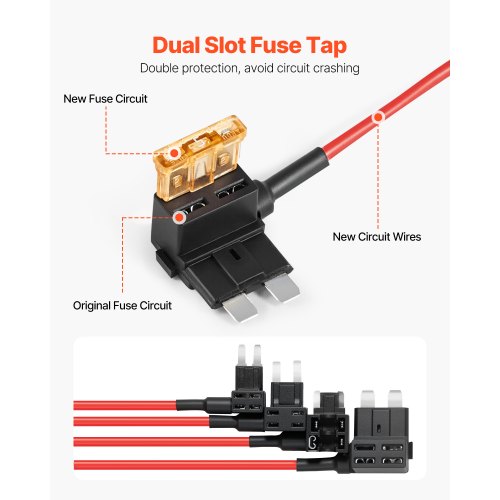
Credit: www.vevor.com
Replacing And Maintaining Fuses
Car fuses protect electrical circuits by stopping too much current. They help avoid damage to wires and parts.
Replacing and maintaining fuses keeps your car safe and working well. It is important to check fuses regularly.
Choosing The Right Fuse
Pick a fuse with the same size and amperage as the old one. Using the wrong fuse can cause more damage.
Check your car manual or fuse box cover for the correct fuse type. There are different fuses for different circuits.
- Match the amperage rating exactly
- Use the same physical size and shape
- Use the fuse type recommended by the manufacturer
Safe Replacement Tips
Turn off the car and remove the key before replacing any fuse. This prevents electrical shocks and shorts.
Use a fuse puller or needle-nose pliers to remove the old fuse. Avoid touching metal parts to stay safe.
- Identify the blown fuse by its broken wire or dark color
- Replace with a fuse of the same rating only
- Do not use foil or other materials as a fuse substitute
- Test the new fuse by turning on the car and checking the circuit
- If the fuse blows again, have your car checked by a professional

Credit: www.vevor.com
Frequently Asked Questions
What Is The Main Function Of A Car Fuse?
A car fuse stops too much electricity from damaging the car’s circuits.
How Does A Car Fuse Protect Electrical Circuits?
It breaks the circuit if the current is too high, preventing damage.
Where Are Car Fuses Usually Located?
Car fuses are found in fuse boxes under the dashboard or hood.
How Do I Know If A Car Fuse Is Blown?
A blown fuse often looks black or broken inside the clear casing.
Can A Car Fuse Prevent Electrical Fires?
Yes, fuses stop excess current that could cause wires to overheat and catch fire.
Conclusion
Car fuses keep your vehicle’s circuits safe from damage. They stop too much electricity from flowing. This prevents wires and parts from burning out. A working fuse means your car runs smoothly and safely. Always check fuses if electrical issues appear.
Simple to replace and important to know. Protect your car’s electrical system with proper fuse care. Easy steps help avoid costly repairs later. Safety first, always.